
7 Relaxation Techniques for Anxiety to Calm Mind and Body
When anxiety makes your breathing feel faster, your muscles tense or your thoughts difficult to slow down, a simple relaxation exercise may help your mind and body settle. The seven relaxation techniques for anxiety below can be practised during calmer moments as well as when you first notice tension building.
Relaxation techniques do not remove every source of anxiety and are not a replacement for professional treatment. They are practical self-help tools that may help reduce physical tension, steady your breathing and bring your attention back to the present.
Relaxation techniques at a glance
If anxiety feels physical
- Fast or shallow breathing: try slow, comfortable breathing.
- Tight or aching muscles: try progressive muscle relaxation.
- Restlessness: try gentle movement.
If your thoughts feel busy
- Racing or spiralling thoughts: try grounding or mindful noticing.
- Difficulty switching off: try guided visualisation or self-hypnosis.
What are relaxation techniques for anxiety?
Relaxation techniques are exercises that encourage a calmer physical and mental state. Anxiety can be accompanied by faster breathing, muscle tension, restlessness, a racing heart or thoughts that feel fixed on what might happen next. A relaxation exercise gives you something steady and manageable to focus on while your body begins to settle.
Different techniques work in different ways. Breathing and muscle relaxation focus on physical tension, while grounding and mindfulness redirect attention to what is happening in the present. Visualisation and guided relaxation use focused attention and imagery to create a greater sense of calm.
There is no single technique that works best for everyone. It can be helpful to try several methods and notice which ones feel comfortable and useful for you.
7 relaxation techniques and exercises for anxiety
1. Slow, comfortable breathing
Anxiety can make breathing faster and shallower without you noticing. Deliberately slowing your breath may help reduce the feeling that your body is speeding up.
- Sit with your feet supported and let your shoulders soften.
- Breathe in gently through your nose for a comfortable count of three.
- Breathe out slowly for a count of three, or slightly longer if that feels natural.
- Continue for one to two minutes without forcing the breath to become unusually deep.
Helpful reminder: The aim is slower, easier breathing, not the biggest breath possible. If you become light-headed or more uncomfortable, stop and return to your normal breathing.
2. Progressive muscle relaxation
Progressive muscle relaxation can help you recognise the difference between tension and release. It involves briefly tightening and then relaxing muscle groups one at a time.
- Sit or lie somewhere comfortable.
- Begin with your feet and gently tense the muscles for about three seconds.
- Release the tension and notice how the muscles feel as they soften.
- Move gradually through your legs, abdomen, hands, arms, shoulders and face.
- Finish by taking a moment to notice your whole body resting.
Take care: Keep the tension gentle and skip any injured, painful or medically affected area. If you are unsure whether this exercise is suitable, ask your GP or another qualified health professional.
3. The 5-4-3-2-1 grounding exercise
Grounding is especially useful when anxious thoughts pull your attention towards frightening possibilities or make you feel disconnected from your surroundings. This exercise brings your attention back to information available through your senses.
- 5: Name five things you can see.
- 4: Notice four things you can feel or touch.
- 3: Identify three things you can hear.
- 2: Notice two things you can smell.
- 1: Identify one thing you can taste, or imagine a familiar taste.
You do not need to rush. Describe each item quietly to yourself and include simple details such as its colour, texture, temperature or sound.
4. Mindful noticing
Mindfulness involves noticing the present moment without needing to judge, suppress or immediately change what you experience. You are not trying to force your mind to become blank.
- Choose one neutral point of focus, such as the feeling of your feet on the floor or sounds around you.
- Notice the sensations as they are, without deciding whether they are good or bad.
- When your thoughts wander, acknowledge that gently and return to your chosen focus.
- Continue for two to five minutes.
Some people find internal sensations uncomfortable when anxious. If focusing on your breath or body makes you feel worse, keep your eyes open and focus instead on a neutral object or sound in the room.
5. Guided visualisation
Visualisation uses imagination and sensory detail to focus attention on a place or experience associated with comfort and calm.
- Choose a real or imagined place where you would feel comfortable.
- Picture what you might see there, including colours, shapes and light.
- Add sounds, scents, temperature and the feeling of the surface beneath you.
- Let your breathing remain easy as you explore the scene for several minutes.
The chosen place does not need to be a beach or forest. It could be a familiar room, a garden, a quiet café or anywhere that feels personally reassuring. Stop if the imagery becomes uncomfortable.
6. Gentle, mindful movement
Sitting still is not relaxing for everyone. Gentle movement can provide a physical outlet for restlessness while giving your attention a steady rhythm.
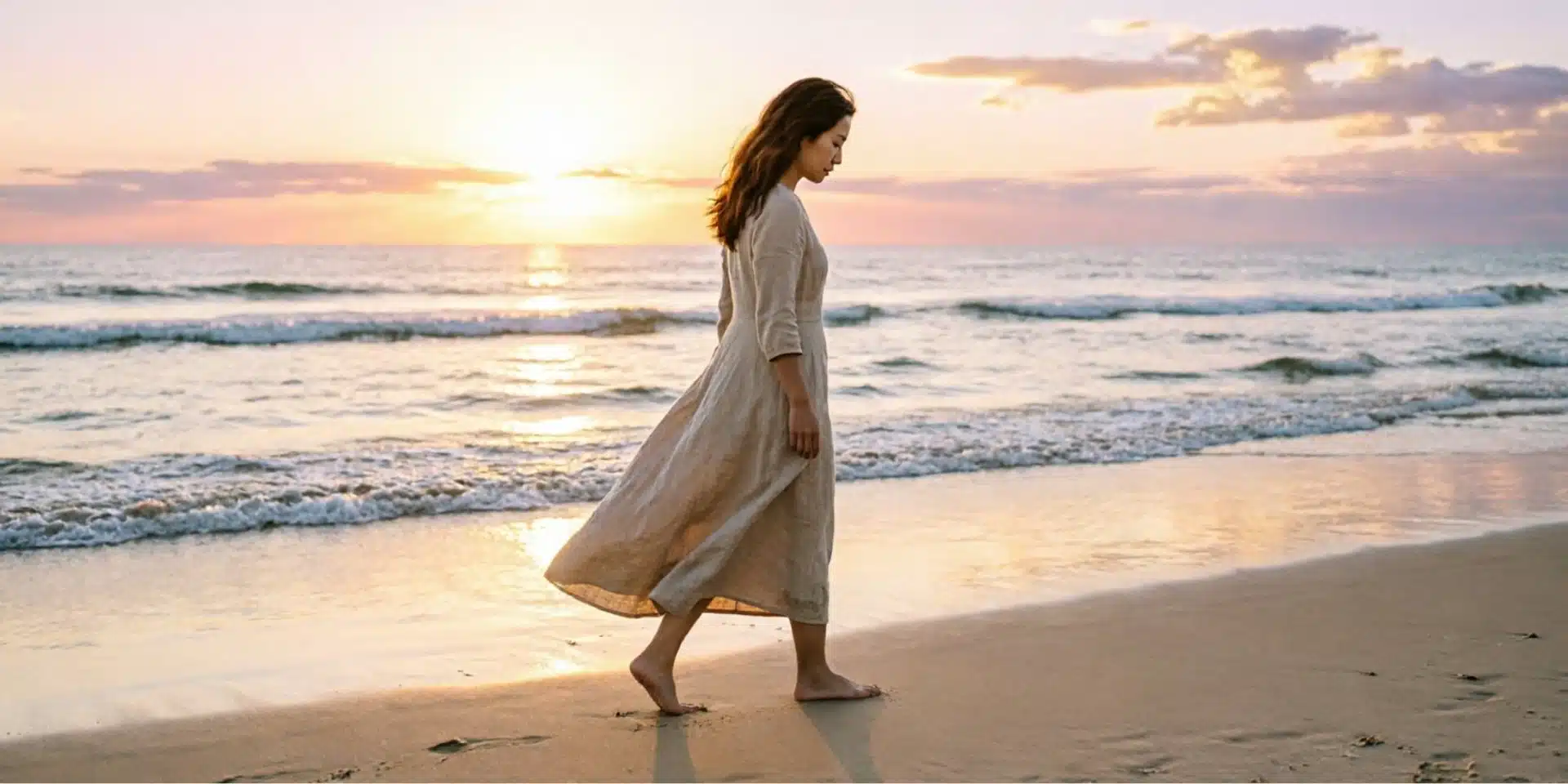
You might take a slow walk, stretch comfortably, roll your shoulders or gently shake tension from your hands. As you move, notice your feet meeting the ground, the movement of your muscles and the air against your skin.
Choose movement that is safe for your health, mobility and surroundings.
7. Guided relaxation and self-hypnosis
Guided relaxation and self-hypnosis use focused attention, relaxation and carefully chosen suggestions. A recording may guide you to settle your breathing, release physical tension, imagine a calming scene and focus on a supportive thought or intention.
Choose a time when you can sit or lie down safely without interruption. Never use a hypnosis or deep-relaxation recording while driving, operating machinery or doing anything that requires your full attention.
Self-hypnosis is a skill that can become more familiar with practice, but it is not a substitute for appropriate anxiety treatment. If inward-focused exercises feel distressing or you have a complex mental health condition, seek advice from a suitably qualified health professional before continuing.
What is the best relaxation technique for anxiety?
The best technique is usually the one that feels manageable, suits the symptoms you are experiencing and can be practised regularly. A method that helps one person may feel distracting or uncomfortable to someone else.
Fast, shallow breathing
Technique to try: Slow, comfortable breathing.
Tight shoulders, jaw or muscles
Technique to try: Progressive muscle relaxation.
Racing thoughts or feeling overwhelmed
Technique to try: 5-4-3-2-1 grounding.
Difficulty staying in the present
Technique to try: Mindful noticing.
Restlessness or excess nervous energy
Technique to try: Gentle movement.
Difficulty winding down
Technique to try: Visualisation or guided relaxation.
It can also be useful to combine techniques. For example, you might slow your breathing while releasing your shoulders, or use grounding before beginning a short visualisation.
How to get more from relaxation exercises
Relaxation is a skill rather than a test you either pass or fail. Practising for a few minutes while you already feel relatively calm can make a technique easier to remember when anxiety begins to rise.
Make practice manageable
- Begin with five minutes and build up gradually if it feels helpful.
- Practise at roughly the same time each day to make it easier to remember.
- Choose a technique that feels simple enough to repeat.
Notice what helps
- Notice small changes rather than expecting anxiety to disappear completely.
- Keep a brief note of which techniques help in different situations.
- Stop or change an exercise if it makes you feel more uncomfortable.
Try not to use relaxation as a way of avoiding every situation that makes you anxious. Avoidance can sometimes maintain anxiety over time. Relaxation skills are often most useful when they help you remain present and respond more deliberately.
When relaxation techniques are not enough
Self-help techniques can support wellbeing, but persistent or intense anxiety may need professional assessment and treatment. Consider speaking with your GP or a qualified mental health professional if anxiety is becoming more frequent, is affecting sleep, work or relationships, is causing you to avoid important activities, or is becoming difficult to manage alone.
Eternal Balance provides personalised hypnotherapy and counselling support for anxiety from our Surfers Paradise clinic and through online appointments where suitable. Sessions are shaped around your circumstances, goals and the kind of support you are seeking.
Urgent support: If you or someone else is in immediate danger, call Triple Zero on 000. For 24-hour crisis support in Australia, contact Lifeline on 13 11 14. You can also call healthdirect on 1800 022 222 for health advice.
Frequently asked questions
Can relaxation techniques stop an anxiety or panic attack?
Slow breathing, grounding and other relaxation techniques may help reduce escalating physical tension and keep your attention in the present, but they cannot guarantee that an anxiety or panic attack will stop. If attacks are recurring, changing or difficult to manage, speak with your GP or a qualified mental health professional.
How quickly should a relaxation exercise work?
Some people notice a small change within a few minutes, while others need longer or find that a different technique works better. The goal does not need to be complete calm. A slower breath, slightly softer muscles or a greater awareness of your surroundings can still be useful.
How often should I practise relaxation techniques for anxiety?
Short, regular practice is often easier to maintain than an occasional long session. You could begin with five minutes once a day and adjust the frequency according to what feels helpful. Practising during calmer periods can make the exercise feel more familiar when anxiety rises.
What if breathing exercises make me feel more anxious?
Stop the exercise and allow your breathing to return to its natural rhythm. Try an externally focused method instead, such as naming objects in the room, listening for different sounds or taking a gentle walk. You do not have to continue a technique that feels uncomfortable.
Are relaxation exercises a treatment for an anxiety disorder?
Relaxation exercises can be useful self-management tools, but they are not a complete treatment for every anxiety disorder. Evidence-based psychological therapies, medical assessment and medication may also be appropriate depending on the person and their symptoms. A GP or qualified mental health professional can help you explore suitable options.
How is hypnotherapy different from ordinary relaxation?
Relaxation generally focuses on reducing physical or mental tension. Hypnotherapy may use relaxation as part of a broader process involving focused attention, guided imagery and suggestion. The approach should be adapted to the individual and the concern they would like support with.
Sources and further support
Would you like personalised support?
Speak with Catherine about what you have been experiencing and whether Eternal Balance’s hypnotherapy, psychotherapy or counselling support may be suitable for your needs.